Reliable Ophthalmic Filling Equipment for Industry: A Practical Guide from the Shop Floor
If you’ve ever watched an ophthalmic filling line stop mid-shift because a nozzle seal failed or a plunger rod wore out of tolerance, you already know the real cost isn’t the part itself — it’s the batch you lose, the validation paperwork you redo, and the explanation you owe your plant head. After spending years around vial washing lines, liquid filling machines, and change format tooling in Gujarat’s pharma belt, I’ve come to believe that reliable ophthalmic filling equipment is less about buying a fancy machine and more about the quality of the spare parts feeding it, day after day, batch after batch. This article walks through what actually makes ophthalmic filling equipment dependable, how change format parts manufacturers approach precision, and where a plant in Mumbai, Hyderabad, or Ahmedabad should look when uptime and sterility both matter.
Why Choose Mahashakti Pharmamach for Reliable Ophthalmic Filling Equipment for Industry?
Mahashakti Pharmamach, based in Vatva GIDC, Ahmedabad, has spent over 15 years working almost exclusively on precision components for pharma filling and packaging lines. Under the leadership of Mr. Bipin Panchal, the company has supplied parts to more than 200 pharma companies across India, with production capacity ranging from 10,000 to 50,000+ components a month. That scale matters for ophthalmic filling specifically, because these lines run tight tolerances — filling needles, dosing pistons, and cap sealing components often need to be accurate to a few microns to avoid dosing variance or particulate contamination.
What I’ve noticed working with plant teams is that reliability rarely comes from a single “wonder part.” It comes from consistent metallurgy, consistent finish, and a supplier who documents every batch. Mahashakti Pharmamach maintains full material traceability on its components, which is exactly what auditors ask for when they trace a filling needle back to its raw material certificate during a GMP inspection. This isn’t a sales pitch — it’s simply what QA teams in Pune, Chennai, or Indore will expect to see on file.
Our Ophthalmic Filling Equipment Manufacturing Capabilities
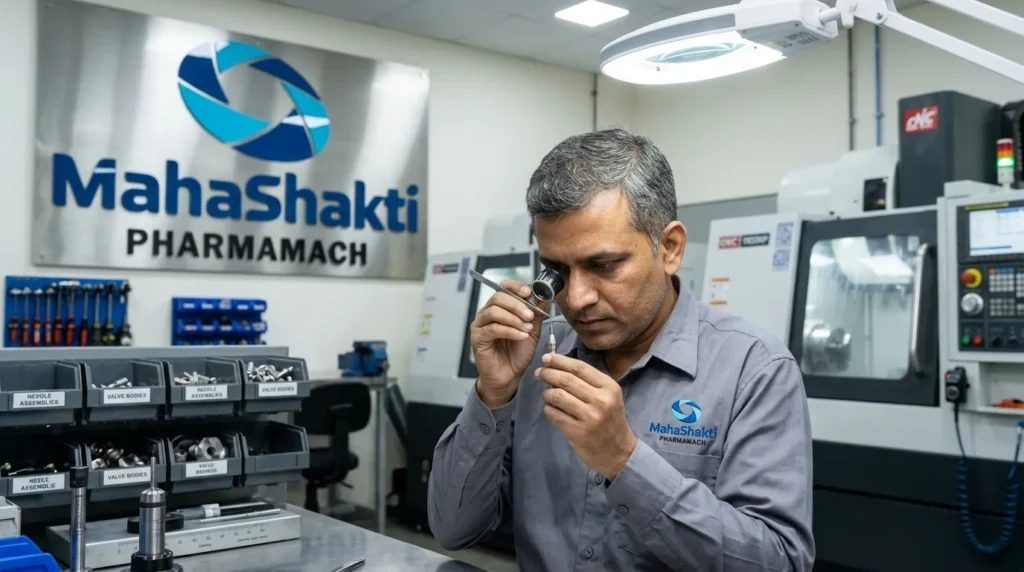
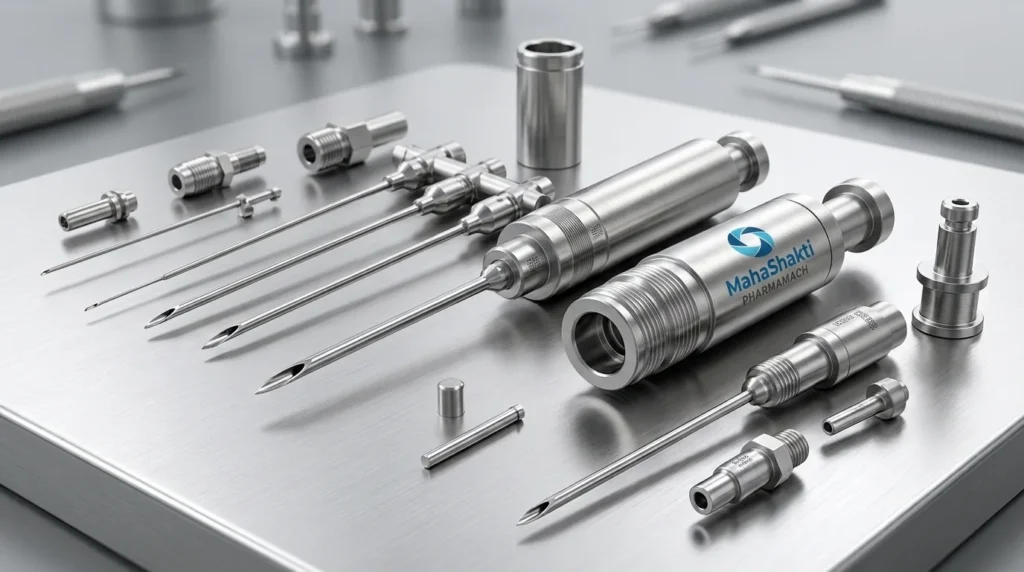
Ophthalmic filling is unforgiving. Unlike general liquid filling, ophthalmic solutions often go straight into the eye, so any part touching the product path needs to be free of burrs, properly passivated, and dimensionally stable under repeated sterilization cycles. Mahashakti Pharmamach manufactures a range of components relevant here, including liquid filling needles, dosing pistons, cap sealing rollers, change parts for different vial and bottle sizes, and sterile tools used during line setup and changeover.
A few things I always tell younger engineers on the shop floor: check the surface finish of the filling needle first, not last. A rough internal bore on a needle can cause dosing inconsistency long before it becomes visible as a leak. Second, ask for custom change format parts rather than trying to force a universal part across container sizes — I’ve seen plants in Surat lose an entire morning shift trying to make a generic part fit a non-standard vial neck. Custom-engineered change parts, built to your exact drawing or sample, remove that guesswork.
The company also supports low MOQ spare parts orders, which matters for smaller contract manufacturers in Jaipur or Chandigarh who can’t justify bulk orders for a part they may only need in batches of 50 or 100.
Navigating Quality Standards & GMP Compliance
Here’s how quality actually gets checked on a real ophthalmic line: incoming parts are visually inspected, dimensionally verified against the drawing, and, for product-contact components, checked for surface roughness and material certification. GMP-aligned manufacturing (as outlined by WHO’s GMP guidelines) and ISO-referenced quality systems both expect this level of documentation, not just a compliance stamp on a box.
GMP compliant parts should arrive with a certificate of conformance, and ideally, batch traceability back to the raw material heat number. This is standard practice at Mahashakti Pharmamach, and it’s the kind of detail that saves a plant head hours during a customer or regulatory audit in cities like Bangalore or Kolkata, where multinational clients often send their own auditors for site visits.
One honest note: even the best-made part will underperform if changeover procedures are rushed. I’ve seen well-manufactured cap sealing rollers get damaged within a week simply because the operator didn’t follow the torque sequence during installation. Good parts and good SOPs go together — neither works alone.
Local Suppliers vs Mahashakti Pharmamach
Plant procurement teams often ask how a specialised pharma machinery spare parts manufacturer compares with a general local machine shop. Here’s a straightforward comparison based on what I’ve seen across multiple audits and changeovers:
| Parameter | Local General Machine Shop | Mahashakti Pharmamach |
|---|---|---|
| Material Traceability | Often not documented | Full traceability maintained |
| Pharma-specific Tolerances | Variable, general engineering focus | 15+ years pharma-focused precision CNC |
| Custom Change Format Parts | Limited design support | Drawing/sample-based custom manufacturing |
| MOQ Flexibility | Sometimes high MOQ | Low MOQ spare parts supported |
| Pan-India / Export Supply | Usually regional only | Pan-India supply plus exports to UAE, Africa, Nepal |
Step-by-Step Process – How We Deliver Ophthalmic Filling Equipment Parts?
Yes, we provide a structured process rather than an ad-hoc order-and-ship approach, because ophthalmic filling parts don’t tolerate guesswork:
- Drawing or sample review – the team studies your existing part, drawing, or a worn sample sent from your plant in Delhi, Vadodara, or anywhere else in India.
- Material selection – appropriate grade stainless steel or engineering polymer is chosen based on product contact requirements.
- Precision CNC manufacturing – parts are machined to tolerance, whether it’s a filling needle or a full vial washing parts set.
- Inspection and documentation – dimensional checks, surface finish verification, and material certificates are compiled.
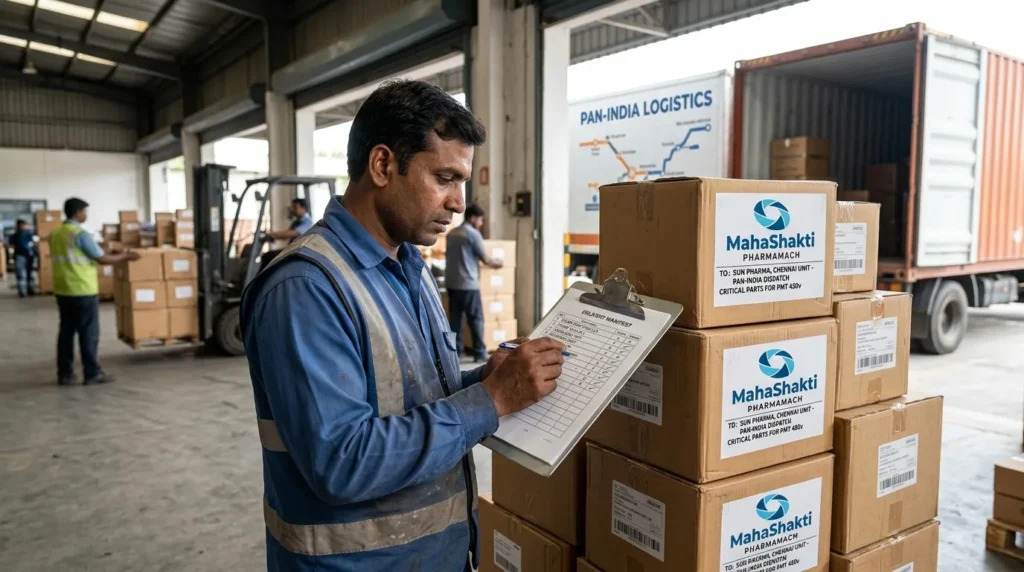
- Dispatch – pan-India logistics, with export documentation prepared for international clients.
Real Client Case Study
A mid-sized ophthalmic and sterile liquid manufacturer near Hyderabad — we’ll call them “Client A” to maintain confidentiality — was facing recurring dosing variance on their eye-drop filling line. Their existing filling needles, sourced from a general fabricator, showed inconsistent internal bore finish after repeated autoclave cycles, causing volume drift of nearly 3-4% batch to batch.
Mahashakti Pharmamach reviewed the worn samples, re-engineered the needle set with tighter internal tolerance and better surface passivation, and delivered a trial batch within the agreed timeline. After switching over, the client reported dosing variance dropping to within their acceptable range, and changeover time during format switches also reduced, since the new change parts were built to the exact drawing rather than adapted from a generic design. A smaller but telling win: their next regulatory audit passed without a single observation related to filling component traceability.
Frequently Searched Questions
1. What is ophthalmic filling equipment used for in the pharmaceutical industry?
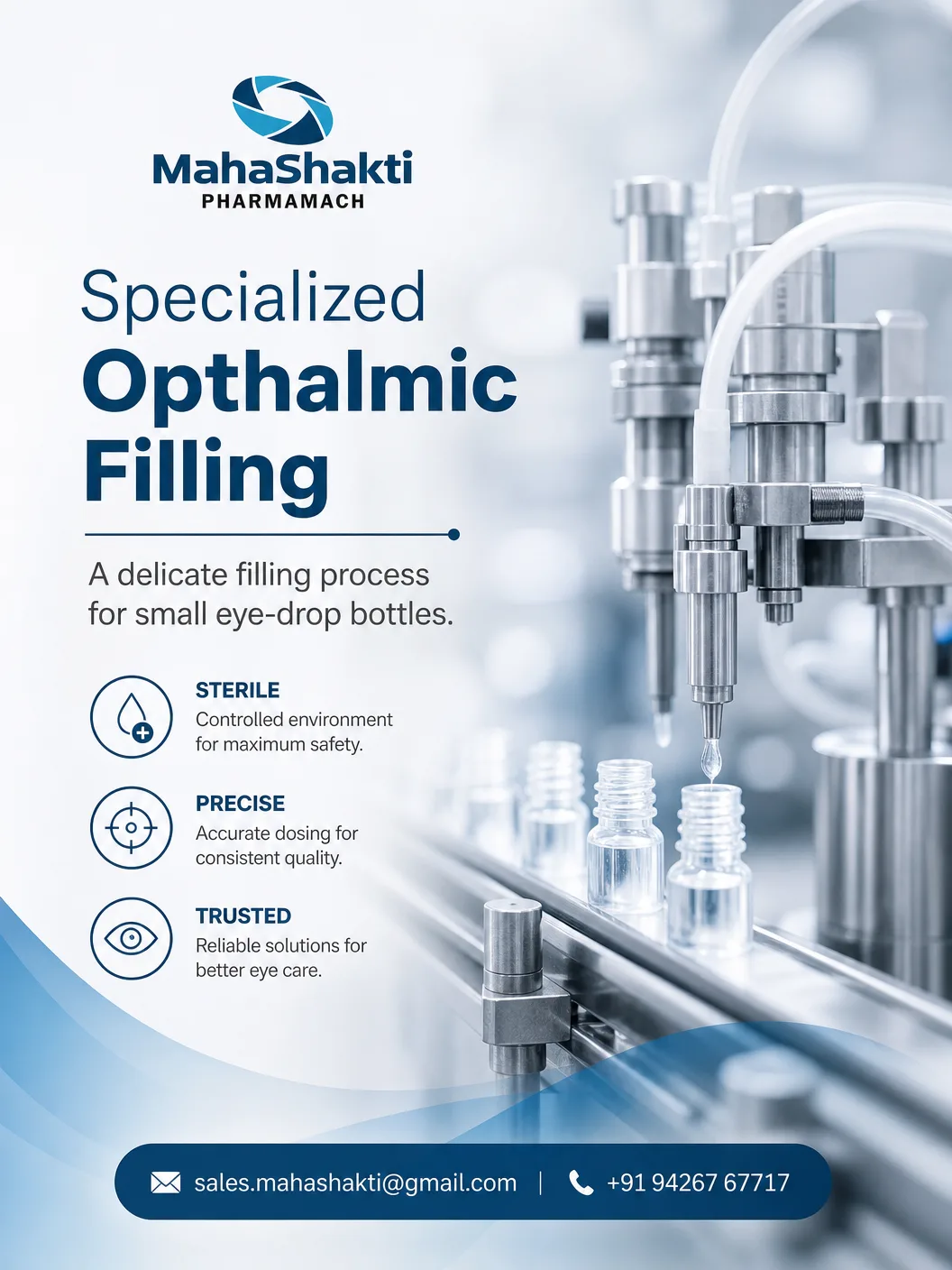
- Ophthalmic filling equipment is used to accurately fill sterile eye-drop solutions into bottles under controlled and contamination-free conditions. These machines help pharmaceutical manufacturers maintain product safety, dosing accuracy, and regulatory compliance.
2. Why is sterile ophthalmic filling equipment important for pharmaceutical manufacturing?
- Sterile ophthalmic filling equipment is essential because eye-drop products require the highest level of contamination control. Advanced filling systems ensure aseptic processing, product integrity, and compliance with global pharmaceutical standards such as GMP and FDA requirements.
3. What features should buyers look for in reliable ophthalmic filling equipment?
- Buyers should consider filling accuracy, sterile design, automation capabilities, production speed, CIP/SIP compatibility, validation support, and regulatory compliance when selecting ophthalmic filling equipment for pharmaceutical manufacturing facilities.
4. India me ophthalmic filling machine kharidte samay kin factors ko consider karna chahiye?
- India me ophthalmic filling machine purchase karte waqt production capacity, filling accuracy, aseptic design, GMP compliance, after-sales support, spare parts availability, aur long-term operational reliability ko zaroor consider karna chahiye.
5. Kya automatic ophthalmic filling equipment small aur large pharmaceutical companies dono ke liye suitable hai?
- Haan, automatic ophthalmic filling equipment modular designs me available hota hai, jisse small-scale pharmaceutical companies se lekar large-scale manufacturing facilities tak sabhi apni production requirements ke hisaab se solution choose kar sakte hain.
6. Ophthalmic filling equipment ka maintenance kitna important hota hai?
- Ophthalmic filling equipment ka regular maintenance bahut important hota hai kyunki isse machine performance, filling accuracy, sterility assurance, production uptime, aur equipment lifespan significantly improve hoti hai.
7. Which industries benefit most from reliable ophthalmic filling equipment?
- Reliable ophthalmic filling equipment is widely used by pharmaceutical manufacturers, ophthalmic product companies, biotechnology firms, contract manufacturing organizations (CMOs), and sterile liquid production facilities worldwide.